
Blockchain technology is rapidly becoming one of the most transformative innovations of the digital era.With the increasing speed of digital transformations in various industries, numerous countries have difficulty maintaining themselves in step with new technologies. But countries that manage to adopt blockchain technology have an excellent chance to accelerate their economies, increase efficiency of their governance and, finally, enhance cybersecurity.
To be honest, when the term ‘blockchain’ comes up, people often associate it with Bitcoin or any other speculation in cryptocurrency. Yet again, this is too superficial approach as the technology’s potential far exceeds the scope of cryptocurrencies. Countries realizing this potential early enough can benefit greatly from blockchain implementation.
Having studied closely the development of technology and its effect on society, I can safely state that blockchain is something else. Let me show you why.
So What Actually Makes Blockchain Special?
Ultimately, a blockchain is a distributed ledger. In other words, instead of one copy of your book, there are copies of it in hundreds or even thousands of computers at once. Everything entered in this book cannot be altered without the consent of all users involved.
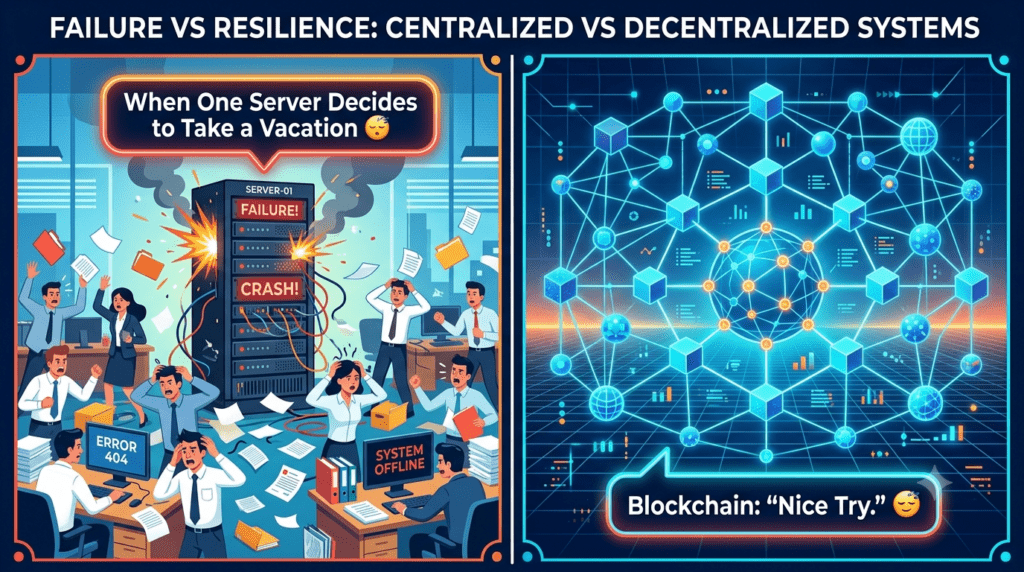
Conventional databases have a central body responsible for the management and regulation. This means a possibility of hacking or corruption on the part of this central body. But when we apply blockchain technology to the conventional system of database management, we eliminate this threat. Furthermore, by combining it with a smart contract (program code automatically executing according to preset conditions), we obtain systems that are both automatic and secure.
For governments of countries with large populations and sophisticated administrative systems, it is truly revolutionary. Imagine that instead of a regular file manager you now have an automated system capable of doing most of the work by itself.
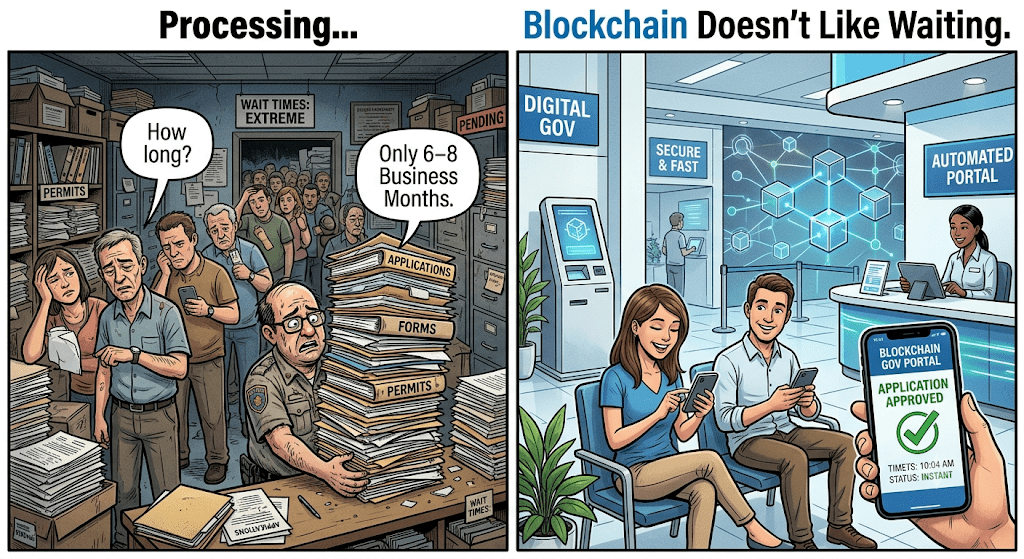
Countries that introduce blockchain-based innovations at an early stage will create the necessary expertise and infrastructure. Those that do not, will sooner or later have to use the already existing solutions, which are likely to be more expensive and inflexible.
The Economic Case And Its Stronger Than You Think
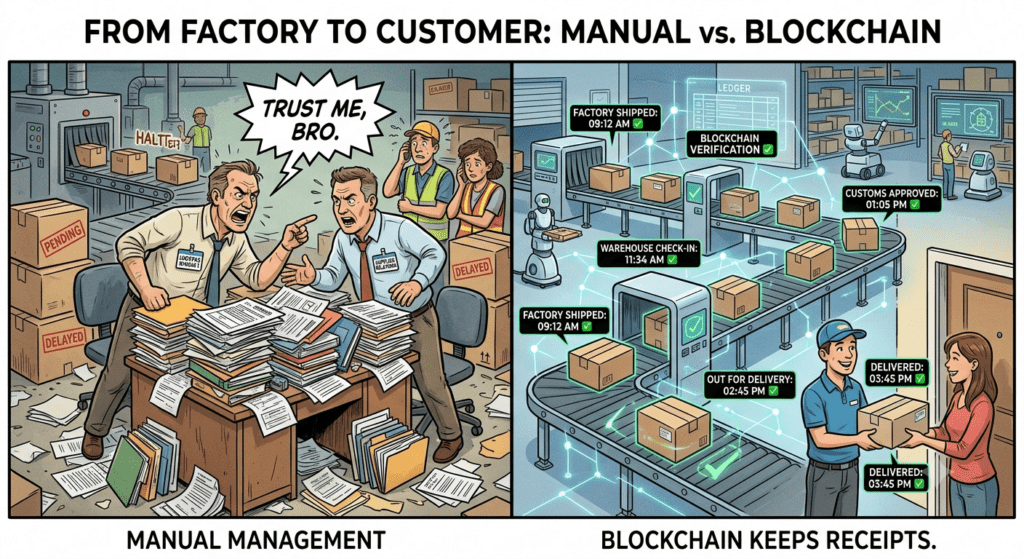
Some of the most compelling reasons for adopting the blockchain fast are the economic benefits that can be brought about by such technological implementation. In supply chain management, efficiency has been an issue in addition to the possibility of fraud. The blockchain technology would bring about traceability of every item, regardless of whether it was drugs, food, or manufactured products.
Another area where implementation of the blockchain could bring about great benefits is international business. Today’s international money transfers involve delays of several days as well as the need for several intermediaries. Such transactions incur much more costs than those using blockchain technology. For developing countries whose economy is based on remittance and export of their goods, this becomes extremely important.
Thirdly, there is also the issue of government procurements which have been identified as one of the most corrupt in any nation. With the help of blockchain technology, the process would become transparent and traceable.
And lets not forget asset tokenization. Blockchain allows real-world assets like property, commodities, or even art to be converted into digital tokens. This makes them more liquid and opens up investment to people who previously couldn’t participate. Overall, these features point toward real GDP growth, more tech jobs, and stronger trade relationships.
Transparency and Governance – This Is Where It Gets Interesting
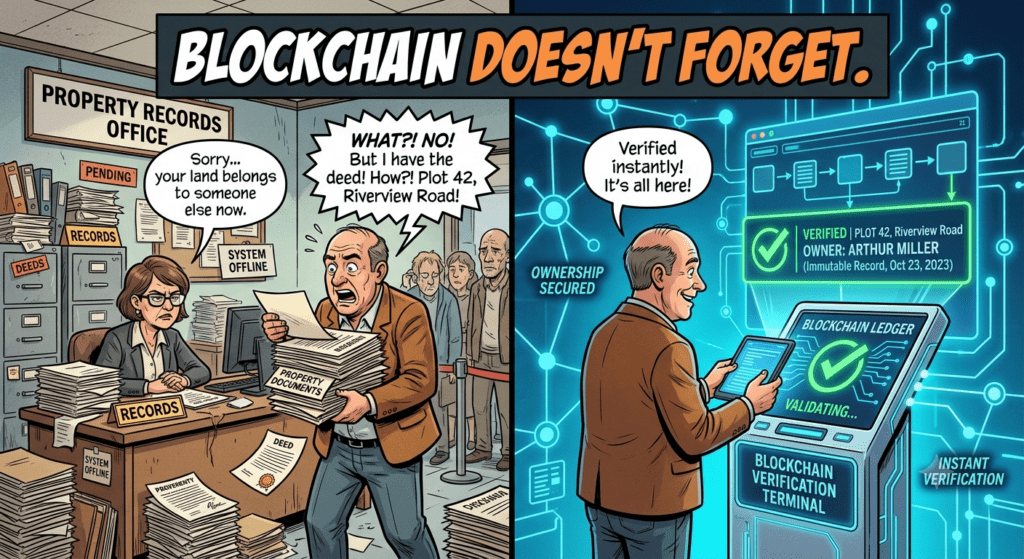
Corruption and inefficiencies are not just ethical issues; they are barriers to development. Blockchain provides a solution that many politicians promise but few can deliver – an immutable record that is publicly verifiable.
A land registry system is an excellent case in point. Property disputes are rampant in most countries due to records being out-of-date, inaccurate, and even fake. However, a land registry based on blockchain will make ownership records unforgeable and easy to trade. This was proven in practice by Georgia.
Another application is the digital identity. In Estonia, blockchain technology has been deployed throughout its e-governance system. Everything from health records, judicial documents, and even votes are stored in it. This helped Estonia become a benchmark example of digital government despite being neither large nor having an endless amount of money.
In welfare and taxation schemes, blockchain can make sure that the subsidies and the benefits go to their actual target recipients through smart contracts which will only release the funds if certain conditions are fulfilled.
Financial Inclusion – The Unbanked Can’t Wait
This is one such truth about blockchains that tends to be ignored: there are hundreds of millions of people who do not have access to even the most basic financial services around the globe. No savings accounts, no loans, no means to receive money electronically.
Blockchain through CBDCs (Central Bank Digital Currencies) and decentralised financial systems will give them the opportunity they have never had before. Just a phone would be enough. No credit rating, no documentation, no bank nearby. They would be able to get all the services that have been denied them for years.
This is a game changer for small business owners and farmers. With the farmer being able to monitor and validate his products using blockchain, he would have an assurance of the quality of his product to potential buyers. He could also negotiate prices and even access credit based on his future yields.
These innovations complement the broader shift toward digital banking, where services like digital savings accounts are making financial products more accessible to underserved populations.
It is also easier to innovate once the blockchain infrastructure is in place. New startups develop innovations that build on the blockchain infrastructure. Health care data becomes exchangeable in a secure manner. Intellectual property rights are safeguarded through digital means. Efficient trading and tracking of clean energy are some of the other uses of blockchain technology. This is why India ranks highly in cryptocurrency usage and is testing out blockchain in various government domains.
Countries That Are Already Doing This
It would be prudent to consider who is actually doing it rather than just talking about it.
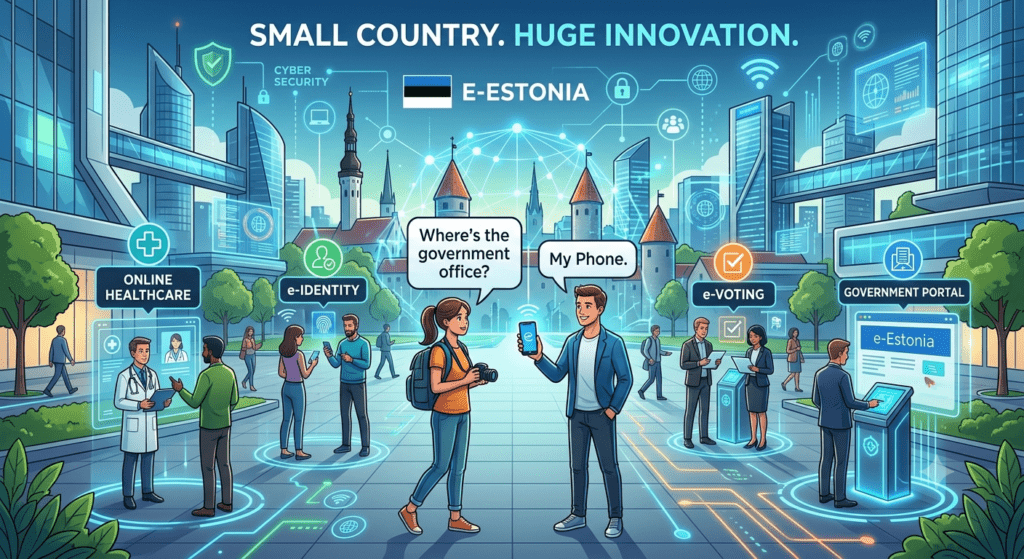
A great example of such an organization is Estonia. Following some of the worst cyberattacks that it has ever faced, the nation reworked their entire digital architecture based on the use of blockchain technology. Today, all government services, document signing, and even management of health records is done online.
The UAE is also working towards the transition of all government documentation on a blockchain ledger. The savings in terms of time, paper work, and money will be huge.
In the case of supply chains, shipping company Maersk has worked with IBM to implement a blockchain-based documentation system for goods shipments. The savings from this project were so big that other industries also paid heed.
These are not laboratory experiments; these are real-world implementations.
Yes, There Are Challenges – But They’re Not Dealbreakers
But, just as every technology has its share of problems, blockchain technology does as well. Those challenges include scalability, energy costs for old Proof-of-Work blockchains, regulatory gaps, expertise problems, and integration problems with existing legacy systems.
But each and every one of those challenges can be solved. For instance, a gradual approach to adopting blockchain technology must be deemed the best one. First, start with applying it where the benefits are most pronounced and the risks the smallest, for example in land registries or public procurement. Build up the expertise by working together with governments and universities and private businesses. Develop the regulations which would promote innovation but would protect the consumers at the same time.
The initial cost may appear to be high, but if compared to the savings that are made due to the reduction of corruption, error rate, speed and inclusion in the process, this expense will not appear significant in the end. Any kind of change is always hard to make, even if it involves the government. However, successful demonstration of the technology will speak louder than any paper.
The Bottom Line
Blockchain deployment is not just about technological progress. It means improving the way the nation state works, improving citizens’ trust in their institutions, boosting competitiveness of business and making the economy more inclusive.
Those nations that are pursuing this path today are creating an advantage that will be very difficult to match afterwards. Policymakers have to focus on developing national blockchain strategies, invest in infrastructure and create partnership between the government and the private sector. The time is ripe for such steps.
Delay is not a passive decision; each year of delay is another year in which other countries are taking the lead and gaining an advantage over us. The ideal time to move would have been some years ago, and the next best time is today.
Also Read | Blockchain Technology in Gaming Industry
What do you think? Should your country be moving faster on blockchain adoption? Let us know your thoughts in the comments below!